SAM1 and NUM1 plans explained
Guide

SAM1 and NUM1 plans explained

What a SAM1 soil management plan and a NUM1 review report must contain, why both are gone from SFI26, what you must still do every year if you hold an older agreement, and the other rules that require these plans anyway.

Two plans, and where they now stand

What SAM1 and NUM1 are

They're the soil and nutrient planning actions from the Sustainable Farming Incentive. They're usually spoken about together, but they ask for different documents and they work differently.

  • SAM1 - assess your soil, produce a written soil management plan, and test soil organic matter. Paid at £6 per hectare plus £97 per agreement, per year.
  • NUM1 - a nutrient management assessment and a written review report, produced with a FACTS qualified adviser. Paid at £652 per year, at agreement level rather than by the hectare.
Both are SFI23 and SFI24 actions. Neither is in SFI26

SAM1 arrived with the SFI 2023 offer and carried into the expanded 2024 offer as CSAM1, with NUM1 becoming CNUM1. Both are now closed to new applications, and neither survived into SFI26. There is no CSAM1 and no CNUM1 among the 71 SFI26 actions, and GOV.UK has withdrawn both action pages.

The soil and nutrient actions that did survive are CSAM2 multi-species winter cover crop, CSAM3 herbal leys, CNUM2 legumes on improved grassland and CNUM3 legume fallow. All four pay you to grow something. None of them pays you to produce a plan. You can browse all 71 SFI26 actions here.

If you hold an SFI23 or SFI24 agreement, the work carries on

Closing to new applications does not end an agreement already running. SAM1 and NUM1 both last three years, and both carry an obligation in every year of the agreement, not only the first.

  • SAM1. Complete the soil assessment and produce the written plan within the first 12 months, then review the plan in each subsequent year, adding any new soil analyses. Organic matter results must be no more than five years old at any point in the agreement, so retest land as its results reach five years. Our soil sampling guide covers what to test for.
  • NUM1. The FACTS adviser visit, the assessment and the review report all fall within the first 12 months. Then in each subsequent year the adviser has to reassess your nutrient use and needs and review the report with you.

The review is the part that gets missed. A plan written in year one and not touched since doesn't meet either action.

England only

SFI is an England scheme, so these codes don't exist in Wales or Scotland, which run the Sustainable Farming Scheme and the Agri-Environment Climate Scheme respectively.
What each plan must contain

A SAM1 soil management plan

The plan is a working document about your soils, covering every parcel entered into the action:

  • Soil type and texture, and how you established it.
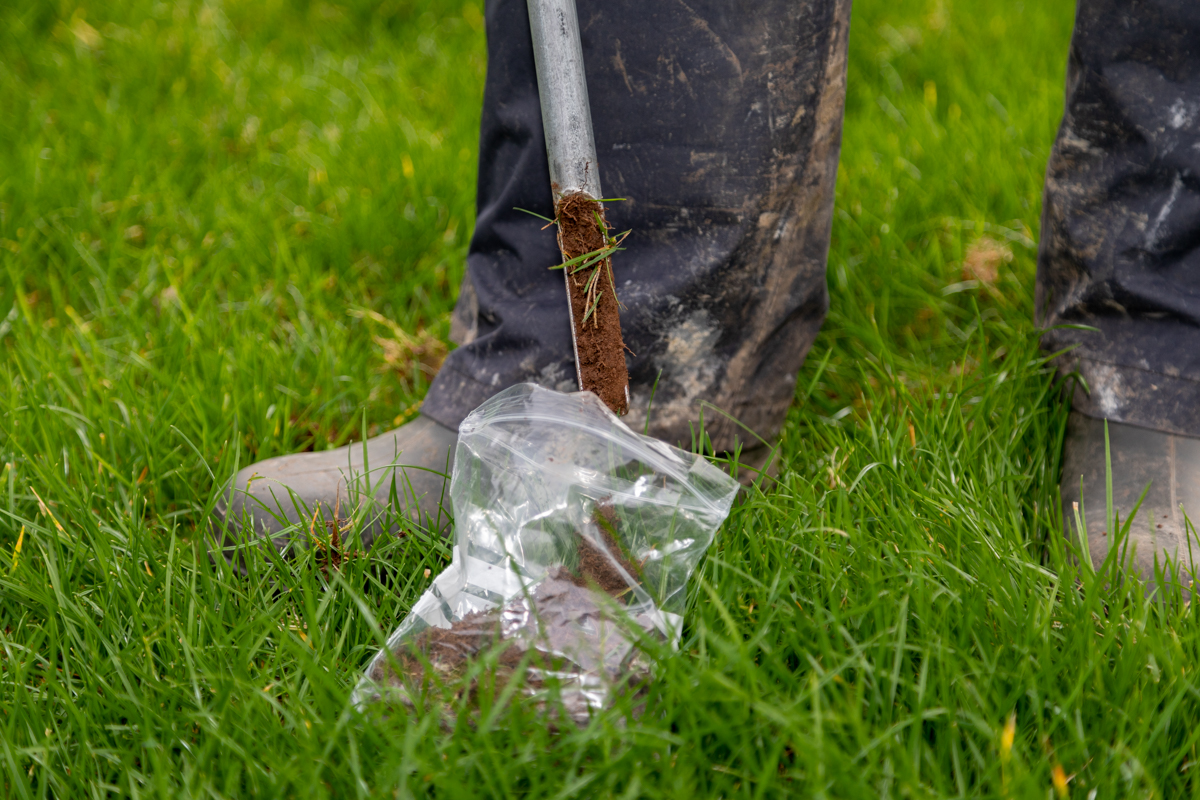
  • A soil assessment - the condition you found. Structure, compaction, rooting, earthworms, organic matter.
  • The risks that apply to that field - erosion, run-off, capping, compaction, organic matter decline.
  • What you're going to do about them, and where. Cover crops, traffic management, changed cultivations, buffer areas.
  • Dated evidence that you looked. A soil assessment with a date and a location attached to it.

Field by field is the standard. A plan describing your soils in general won't do. You can keep it on paper or digitally, and there's no set format.

The soil organic matter test

SAM1 is two requirements in one action, and the second is easy to lose sight of. Every parcel entered must have a soil organic matter result no more than five years old, held for the whole agreement. Small parcels can be combined into a single sample where soil type and past management are similar. You can take the samples at the same time as the routine analysis the Farming Rules for Water already require.

What you must keep is the written plan including the soil assessment, and the organic matter results, produced when asked.

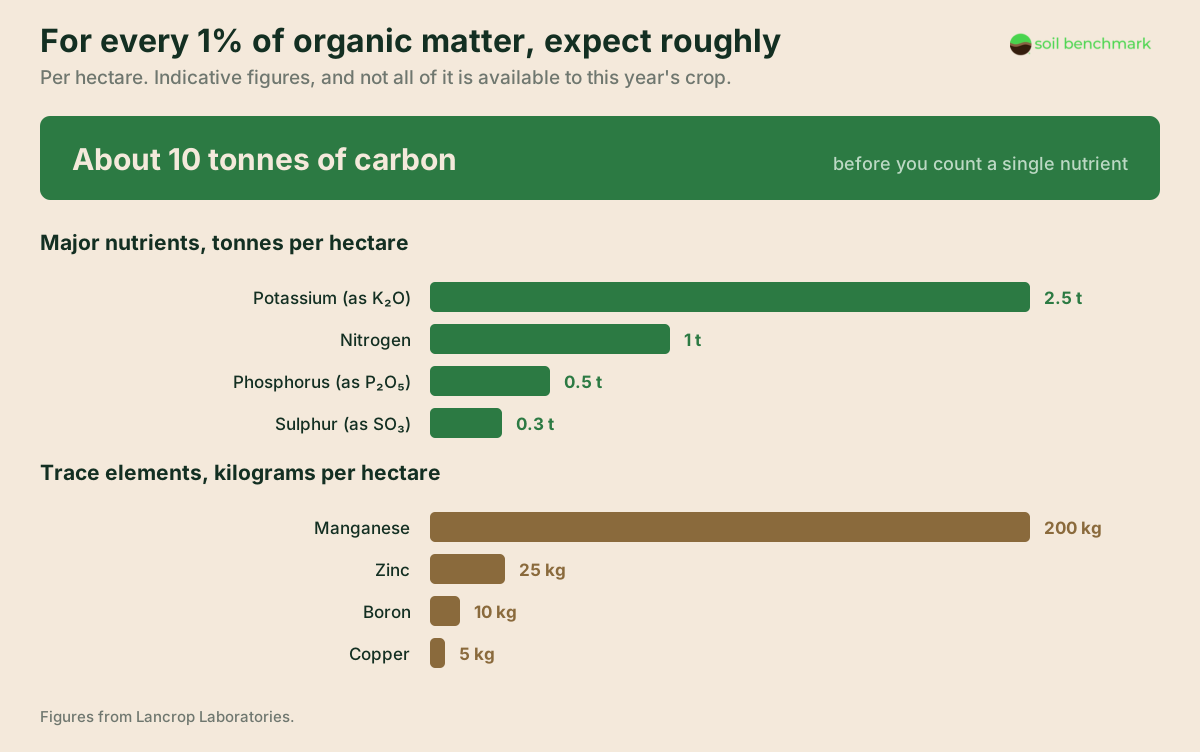
The number is worth more to you than the box it ticks. Organic matter is a nutrient store as well as a soil health measure:

Chart of what to expect for every one per cent of organic matter, per hectare: about 10 tonnes of carbon, 2.5 tonnes of potassium as K2O, 1 tonne of nitrogen, 0.5 tonnes of phosphorus as P2O5, 0.3 tonnes of sulphur as SO3, and trace elements including 200kg of manganese

Our soil sampling guide covers how to take the sample and what the other countries now require.

A NUM1 nutrient management review report

NUM1 catches people out, because you can't simply write it yourself. The action requires a member of the BASIS Professional Register qualified under the Fertiliser Advisers Certification and Training Scheme - a FACTS qualified adviser - to visit the farm and:

  • assess your current nutrient use and your farm's needs
  • identify and discuss where you could use nutrients more efficiently, and make more of your organic sources
  • help you produce the written review report

If you're FACTS qualified yourself, you can do it yourself. If you already hold a review report written by a FACTS adviser within the last 12 months, off the back of a proper assessment, that counts.

NUM1 is an agreement level action, so you don't enter particular parcels into it. The assessment and report should cover all the relevant areas of the farm.

What the nutrient side has to show

Underneath the report it is RB209 applied properly and written down:

  • Current soil analysis - pH, phosphorus, potassium and magnesium, within five years.
  • The crop and expected yield for each field.
  • The nutrient requirement that follows from the crop and the soil indices.
  • The organic manure contribution, counted as available nutrients rather than tonnes applied.
  • The manufactured fertiliser needed to make up the difference.
  • A record of what was actually applied, so the plan and the season can be reconciled.

Why you need these plans anyway

SFI26 removed the payment but kept the plan

Defra dropped the action that paid for a soil management plan and then went on referring to it. Eleven SFI26 actions require you to keep written evidence about the condition of the land you've entered - that it is, or is not, at risk of soil erosion or surface runoff, or that it's prone to waterlogging, compaction or poaching. The guidance for each one tells you that you can use the soil management plan you already produced for CSAM1 or SAM1 to show it.

Those actions are BFS1, AHW4, AHW5, AHW6, AHW7, AHW8, CSAM3, WBD3, WBD4, WBD6 and WBD7.

Note the wording: "already produced". If you never held SAM1 or CSAM1, the evidence requirement still applies to you, and there's no longer an action paying you to produce it.

Red Tractor requires both, separately from any scheme

If you're assured, these plans are already obligations and have been for years:

  • A soil management plan must be established and implemented. That's a standard in its own right, not a recommendation.
  • A nutrient management plan is required, identifying any areas where applications can't be made, recording the nutrient content of organic manures and fertilisers, and setting out how you'll minimise nutrient loss.
  • A manure management plan must be kept and followed wherever organic manures go on land, with a fuller plan in an NVZ.
  • Fertiliser rates must be based on a calculation of the crop's requirement and on regular analysis of soil nutrient levels, taking account of what the organic manures supply.

Our Red Tractor guide covers what the auditor actually asks to see.

And the rules that apply whether you're assured or not
  • The Farming Rules for Water require every application to be planned to meet soil and crop need, with pH, phosphorus, potassium and magnesium results no more than five years old at the time you spread.
  • NVZ rules require a risk map, nitrogen calculations against N max, manure records and field records, all kept for five years.
  • Assurance schemes, buyers and processors increasingly ask to see the same documents.
The evidence question

You aren't asked to send the plans in, but you must be able to produce them when asked. In practice that means:

  • The plans exist as documents, dated, covering the parcels in the agreement.
  • The soil analysis behind them is available as lab certificates.
  • The soil assessments have dates and locations.
  • You can show the plan was in place for the period claimed, not written afterwards.

A plan produced in response to a request carries less weight than one that was clearly in use.

The work you've already done

Very little of this is unique to any one scheme. If you're Red Tractor assured you're already producing soil and nutrient records on the same cycle. If you're in an NVZ you're already keeping application records and doing nitrogen arithmetic. The Farming Rules for Water already expect applications planned against need.

For most farms the information already exists, spread across four places and not in the shape of a plan.

Producing a soil management plan

Turn your soil results into a plan you can hand over

Soil Sage builds a soil management plan field by field from your analysis and your boundaries, maps erosion and run-off risk, and tracks which fields are due for resampling. Export it when you need it for an inspector, an assurance auditor or a scheme agreement. Drafting is free on as many farms as you like.

Get your Farm Compliance done today