DEFRA recently published what they paid out last year to farmers across their schemes, so time for another dig into the numbers, ahead of the main SFI re-launch in September.
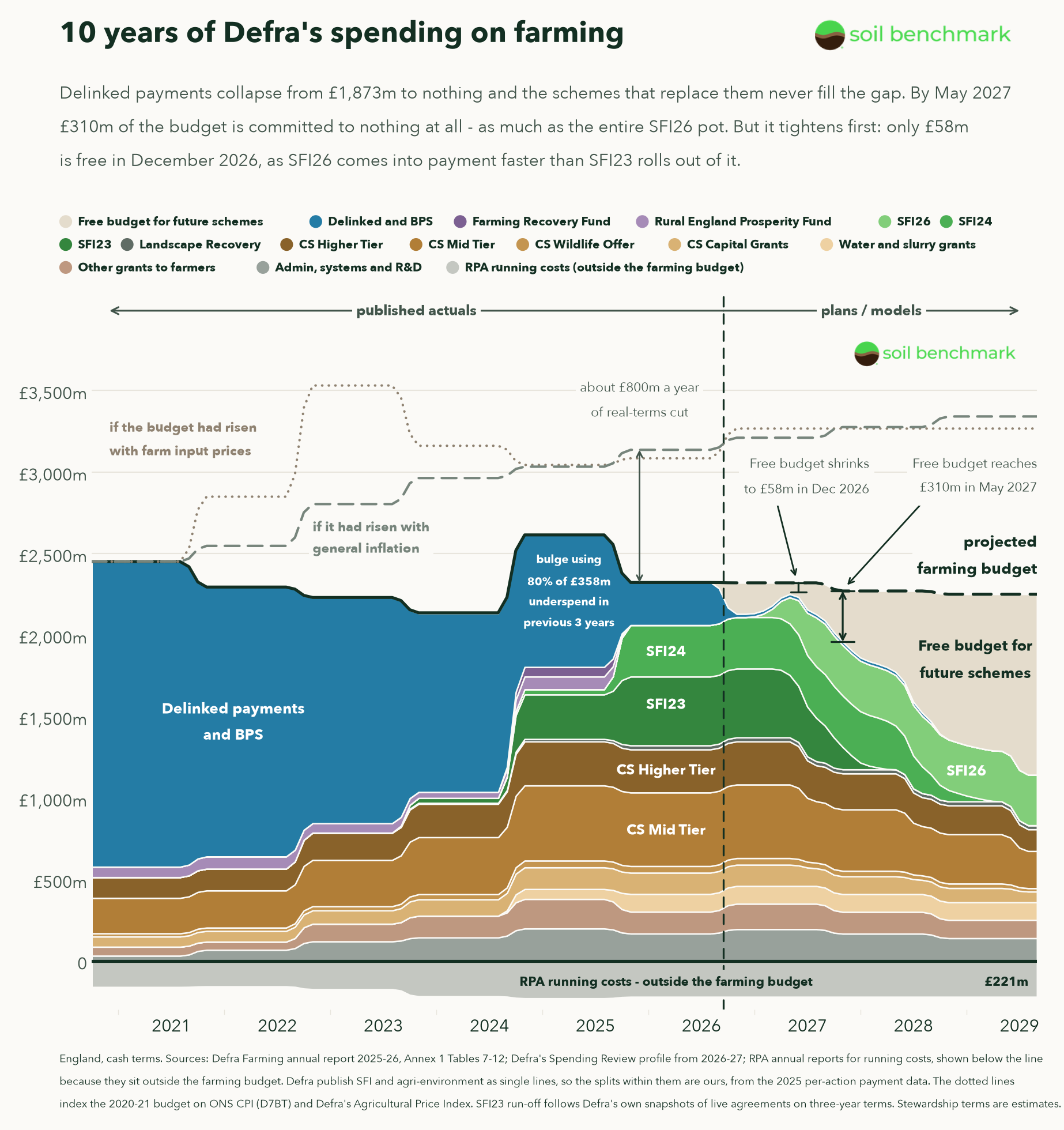
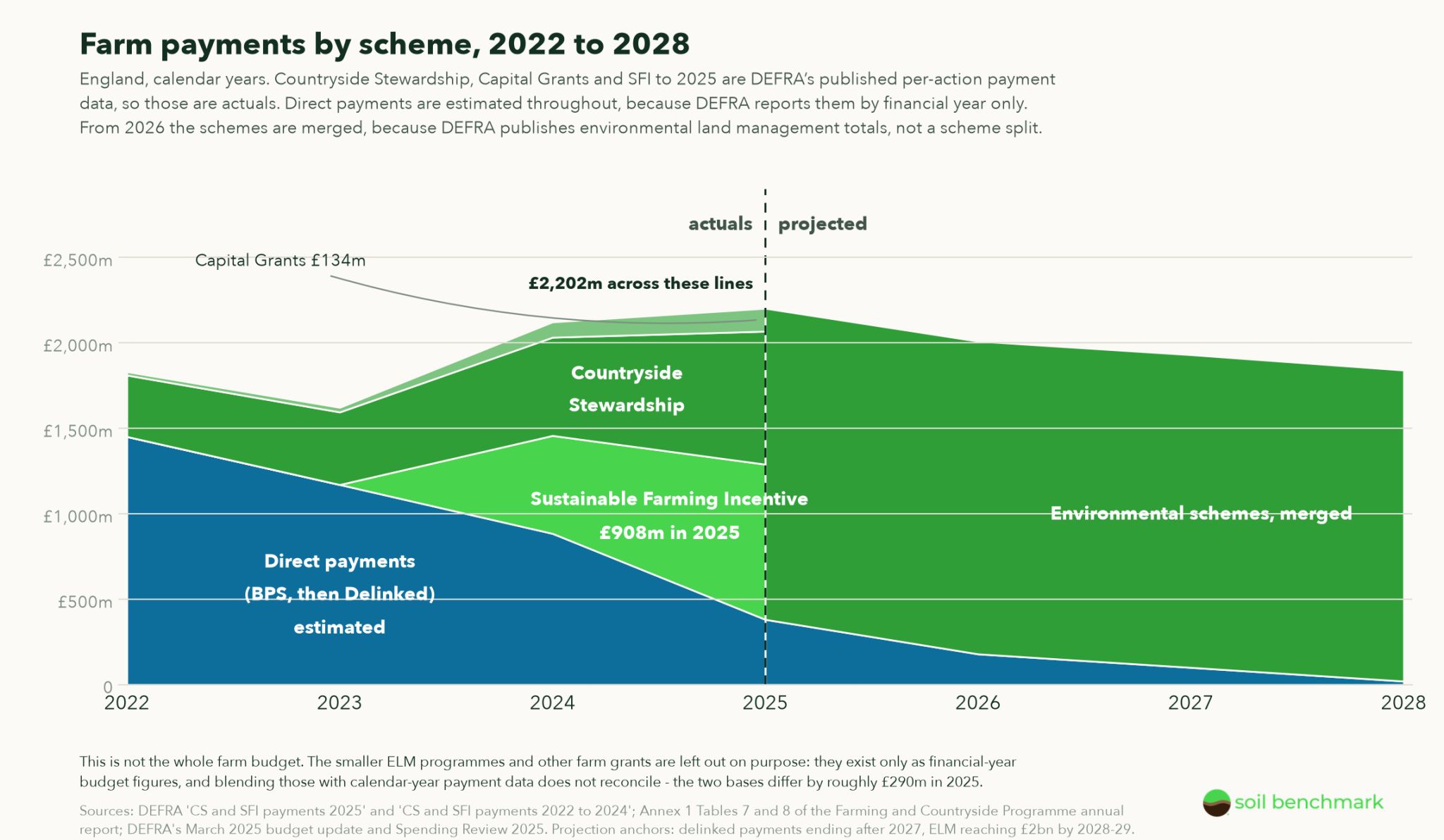
While the budget stayed basically flat between 2021 and 2025 (£2.45bn to £2.60bn) the charts below show the move from direct payments to 'public money for public goods'. Direct payments fell from £1.87bn to £813m (£0 by 2028); the 3 main environmental schemes rose from £433m to £1.39bn (£2bn by 2028).
I've gone through what public goods the Countryside Stewardship, Capital Grants and SFI schemes actually paid for. This is what £1.82bn bought last year (I split each of the 600-odd actions into one of four groups):
🐦 Biodiversity: £968m
🌱 Soil: £496m
💧 Water: £253m
🏚️ Admin, heritage & access: £98m
Alongside that, direct payments were still £813m. But more of the budget is going to non-farmers: of the whole £2.6bn farming spend in 2025, 11.5% (£300m) went to non-farmers (2021: 3.8% / £94m).
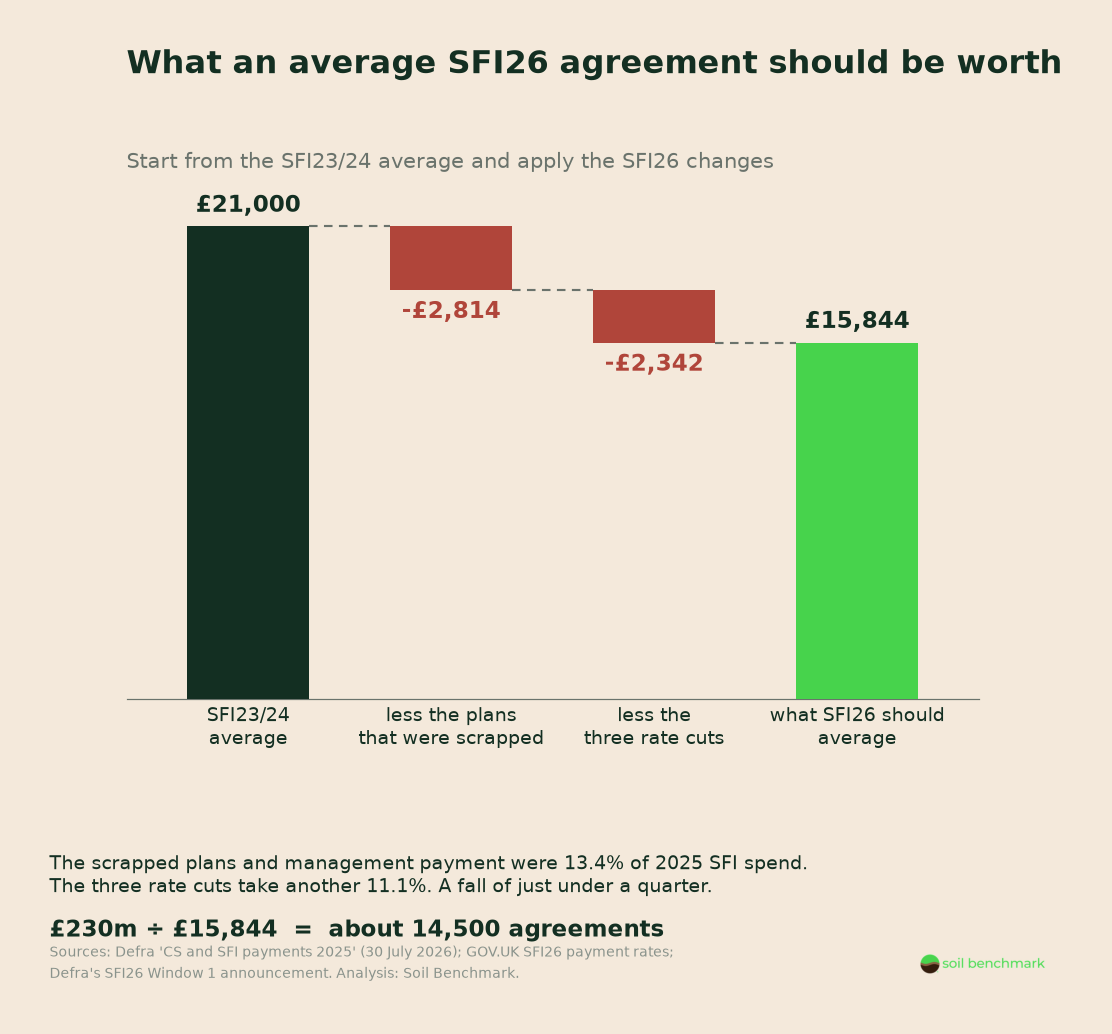
Half of that £1.82bn in 2025 was from the old SFI23/24 schemes. But the new SFI26 scheme has cut the rate on three of the most popular actions - herbal leys (£382 to £224/ha), winter bird food (£853 to £648/ha), legume fallow (£593 to £532/ha) - and gets rid of the planning actions altogether. Because these were the most popular actions, the same mix that earned £908m under SFI23/24 rates would only earn £662m under SFI26 (a 27% cut).
Turned around though, the same £908m at the new rates buys DEFRA 37% more public goods. Assuming demand holds up with lower rates - not unlikely given the original schemes sold out, and 75% of SFI26 Window 1 was reserved within weeks of opening on 30th June - this seems like better value for money. Dropping the management payment is also hard to argue with, and probably the IPM plan too.
But I think there is real public good lost in scrapping the soil and nutrient plans. Some definitely treated them as a box-ticking exercise, but at their best they got a farmer and an advisor round the kitchen table talking about this stuff. My Nuffield Farming Scholarships Trust travels convinced me that money spent getting those conversations going isn't wasted - the Dutch BodemUp scheme just funds 3 visits from a soil advisor, and is heavily oversubscribed. If DEFRA doesn't want to fund plans, could it pay for the visits instead?
The only other things I saw shifting the dial were well-facilitated farmer groups - I'm helping pull together a new Facilitator Forum to support them (https://lnkd.in/eeBGcdrn) - or the climate forcing the conversation (the Millennium drought drove no-till adoption in Australia in the late 90s). Perhaps the crazy wet winters and dry springs we're getting all too used to will drive those conversations anyway, without SFI nudging them along? 🥵
What do others make of the transition? Where were the missteps? Is SFI26 a sensible tweak or a step backwards? Gavin Geoff Kelly Ian Amy Joe Louise ffinlo Charlotte Tom Robbie💡